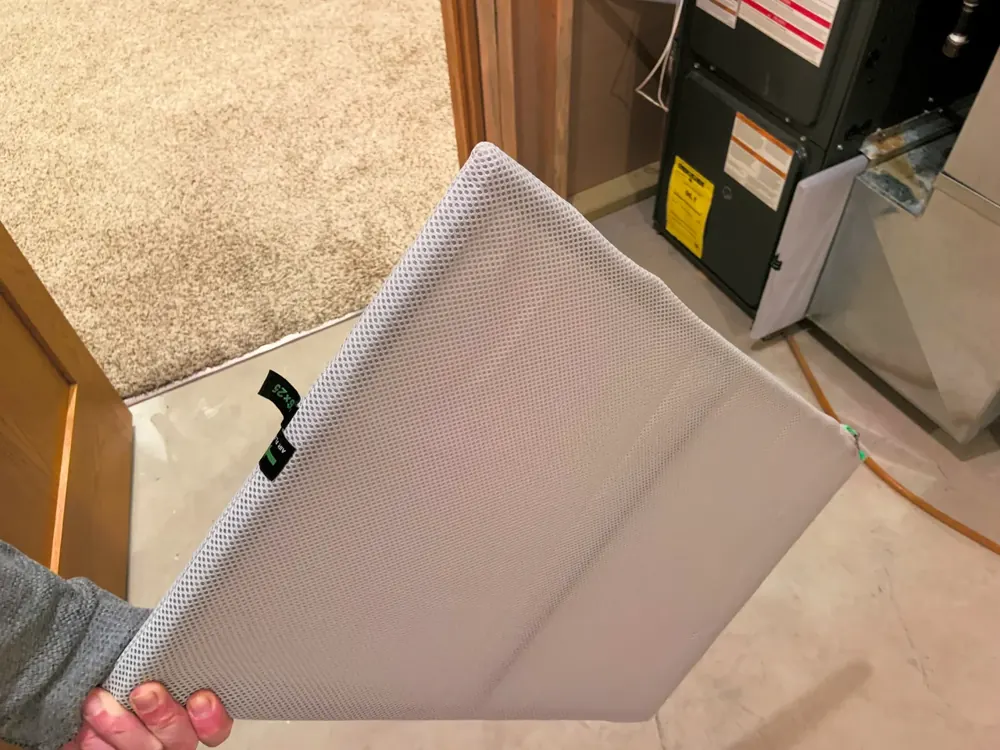
Your HVAC filter is the cheapest part of your system and one of the most important. It catches dust before it reaches the equipment and keeps air moving the way the system was designed. The question most people ask is how often to change it. The honest answer is: it depends on your home, and checking it is easier than guessing.
Start with the label, then adjust
Most filters list a recommended replacement window on the frame, often between one and three months for a standard one-inch filter. Thicker filters, the four or five inch kind, usually last longer. Treat that number as a starting point, not a promise. Your house decides the real schedule.
What makes a filter fill up faster
Some homes ask more of a filter than others. You may need to check yours more often if any of these describe you:
- You have pets that shed, especially more than one.
- Someone in the house has allergies and you run the fan often.
- You live near trees, fields or a construction site, so more pollen and dust come in.
- You have recently done a renovation or sanded floors.
- Your system runs a lot, such as during a long heat wave or a cold snap.
If none of these fit and your home stays fairly clean, you may be able to stretch toward the longer end of the recommended range.
How to check a filter in under a minute
Find the filter slot, usually at the return vent or beside the furnace or air handler. Switch the system off, slide the filter out and look at it in good light. Hold it up and see whether light passes through the material. If it looks gray and matted, or you can barely see through it, it is time for a new one.
Write the date on the frame in marker when you install a new filter. It takes five seconds and means you never have to remember when you last changed it. Many people also set a phone reminder for the first day of each month and simply check.
Check the size and the arrow
Filters come in many sizes, and the right one is printed on the edge of the old filter. Buy the same size. A filter that is slightly too small lets air slip around the edges, which defeats the point. Also look for the arrow on the frame. It should point toward the blower, in the direction the air travels. Installing a filter backward does not help your system.
A thicker or denser filter is not always better
It is tempting to buy the densest filter on the shelf. But a very dense filter can restrict airflow, and a system that was not built for it has to work harder to push air through. That can lead to weaker airflow, longer run times and extra wear. If you want better filtration, ask what your specific system can handle. This is a conversation we are happy to have, and it is part of our indoor air quality work.
What a dirty filter can lead to
A clogged filter blocks airflow. In summer that can cause an air conditioner to freeze up or cool poorly. In winter it can make a furnace run hot and shut itself off. Either way, the system works harder than it should for a worse result. A fresh filter will not fix every comfort problem, but a dirty one can cause several of them. If you are already seeing symptoms, our air conditioning repair and furnace repair pages explain what a diagnosis involves.
Make it part of a routine
The easiest way to stay on top of this is to tie it to something you already do. Check the filter when you change the smoke detector batteries, when the seasons change or on the first of every month. If you would rather not think about it at all, a maintenance plan includes filter checks during each seasonal visit, so someone is looking at it for you twice a year.
The short version
- Check your filter monthly. Replace it when it looks gray and clogged.
- Use the manufacturer’s range as a starting point, and shorten it for pets, pollen and heavy use.
- Match the size and point the arrow toward the blower.
- Ask before switching to a much denser filter.
- Write the date on the frame so you always know.
Not sure which filter fits your system, or noticing weak airflow? Use the quote form and let us know what you are seeing.