The first hot day of the year is the worst time to find out your air conditioner has a problem. Every repair company is busy and everyone in the neighborhood is calling at once. A few simple checks in spring, before you need the cooling, catch the most common issues while there is still time to deal with them calmly. None of these steps need tools, and most take just a few minutes.
1. Look at the outdoor unit
Walk around the outdoor unit and check what winter left behind. Leaves, sticks, grass clippings and cottonwood fluff can collect around and inside it. Remove debris by hand, and keep plants and fences at least a couple of feet back so air can move freely. Make sure the unit sits level and that no wires or pipes look damaged or chewed.
2. Rinse the outside, gently
Dirt on the outer fins reduces how well the unit can release heat. Turn the system off at the thermostat first. Then spray the fins gently from the outside with a garden hose. Do not use a pressure washer, because the fins bend easily and bent fins block airflow. If the fins look badly clogged, or you are not comfortable doing this, ask a technician to clean them.
3. Replace the air filter
A fresh filter is the single easiest improvement you can make before cooling season. A clogged filter restricts airflow and makes the system work harder. If you are not sure how often you should replace yours, read our guide on how often to change an HVAC filter.
4. Check the thermostat
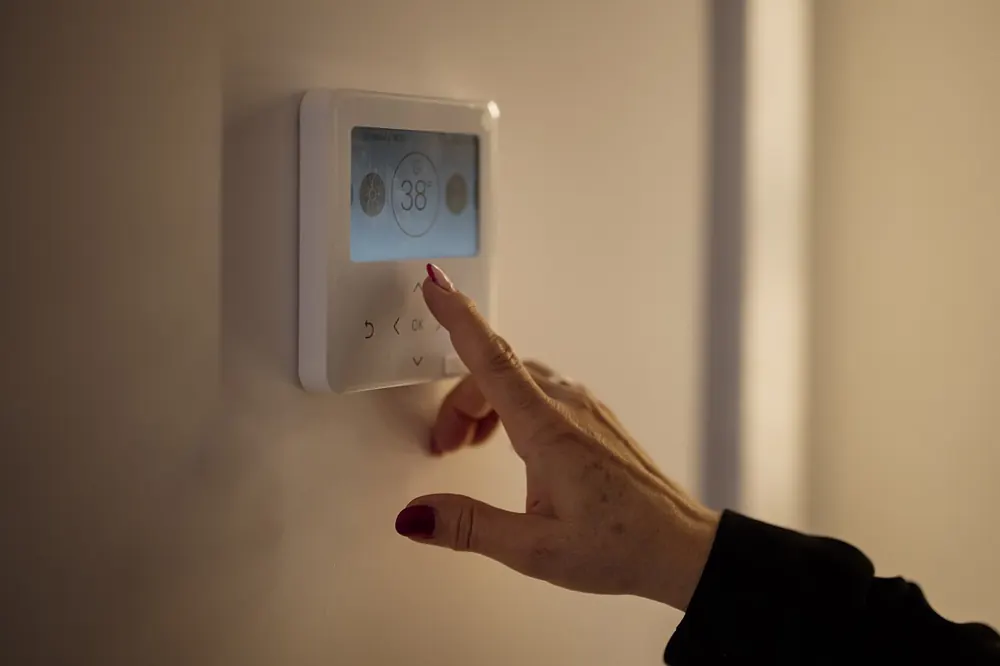
Switch the thermostat to cool and set it a few degrees below the room temperature. The system should start within a few minutes. If you have a programmable or smart thermostat, check the schedule too. Winter schedules often do not suit summer. Replace the batteries if your thermostat uses them. Dead batteries cause more service calls than you might expect.
5. Listen and smell as it starts
Stand near the indoor vents and the outdoor unit when the system first starts. You are listening for anything unusual, like grinding, squealing, loud rattling or a clicking that repeats without the system starting. You are also checking for a musty or burning smell. A faint dusty smell for the first few minutes can be normal. A smell that persists is worth a call.
6. Check the airflow in each room
Walk through the house with the system running and put your hand near each vent. Airflow should feel steady and cool. If some rooms feel weak, check that vents are open and nothing is blocking them. Furniture and rugs can cover floor vents without you noticing. If a room is still weak, that is useful information to share with a technician.
7. Look at the drain line
Air conditioners remove moisture from the air, and that water has to go somewhere. Find the drain line near the indoor unit, which is usually a white plastic pipe. Check that it is not dripping where it should not be, and that there is no water pooling around the unit. Water near the indoor equipment is a reason to call, since a clogged drain can cause damage.
8. Make sure nothing is leaking or icing
Ice on the indoor coil or on refrigerant lines means something is wrong, often airflow or refrigerant. If you see ice, turn the system off so it can thaw, and replace the filter. If it ices again, you need a diagnosis. Running a system that is freezing up can cause bigger problems.
9. Think about the age of the system
If your system is older, or you have been paying for repairs more often, spring is a good time to start thinking about your plans. Waiting until a breakdown puts you in a hurry. Planning ahead gives you time to compare options calmly. Our installation page explains how we size and quote a replacement.
10. Book a tune-up
These checks help, but a trained technician can look at things you cannot, like electrical connections, refrigerant levels and the condition of internal parts. A spring tune-up is the natural next step, and it is what our maintenance plans are built around.
If something does not look right
If your checks turn up weak cooling, strange noises, ice or water, do not wait for the hottest day. Read about our air conditioning repair process, then send us a request and let us know what you noticed.