Homeowner guidesHeating
Should you repair or replace a 15 year old furnace?
Five honest questions and one simple rule of thumb to help you decide between fixing an older furnace and planning a replacement.
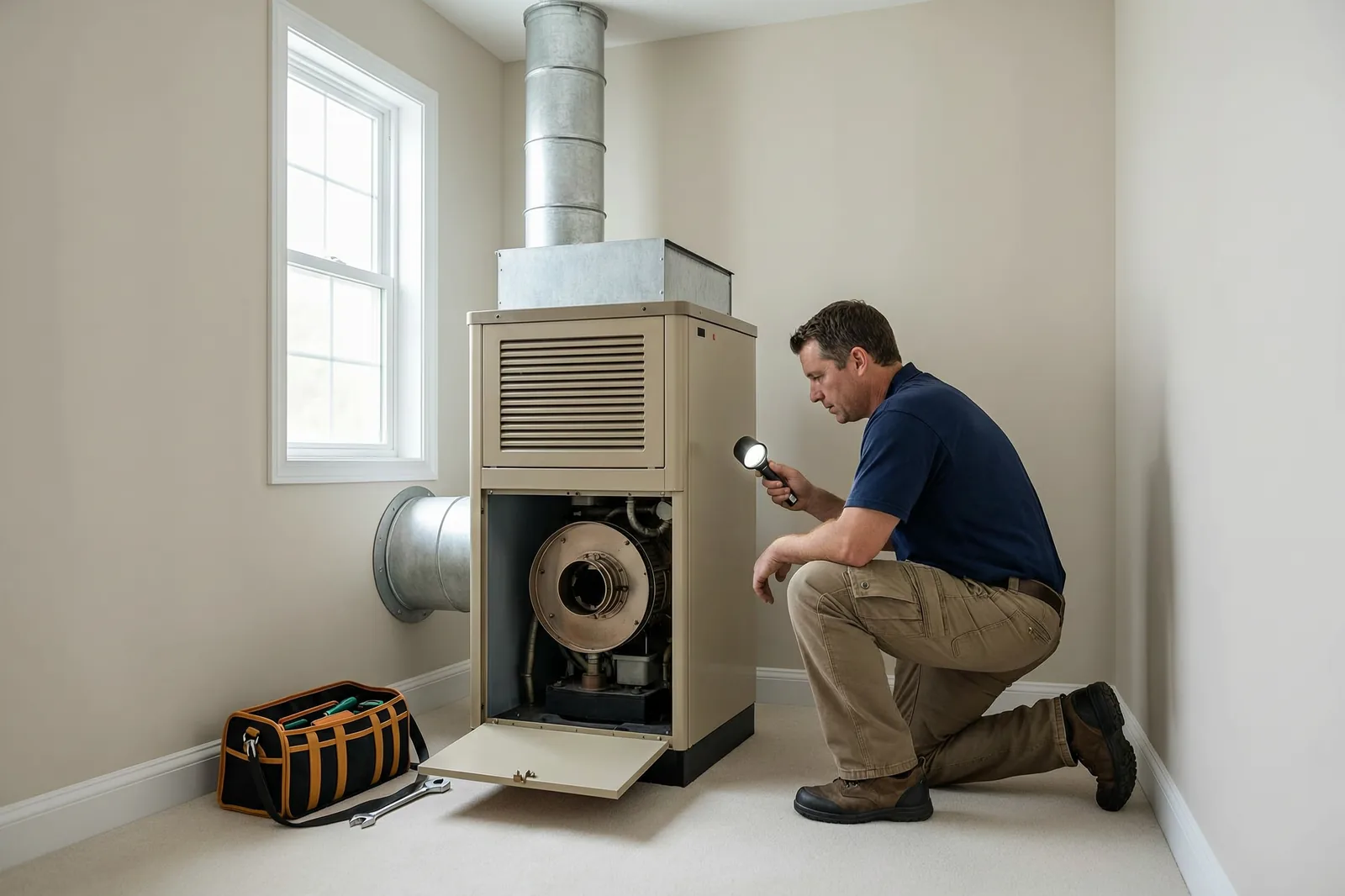
Your furnace is around 15 years old, and it just needed a repair. Maybe it was the second one in two winters. Now you are wondering whether to fix it again or start planning a replacement. There is no single right answer, but there is a calm way to think it through, and it starts with a few honest questions about the system you have.
Why 15 years is the age people ask about
A well maintained gas furnace often runs for 15 to 20 years, sometimes longer. Fifteen is the point where the answer to “should we fix it?” stops being automatic. Parts wear out, newer models use less fuel, and every repair dollar goes into equipment with fewer years ahead of it. That does not mean a 15 year old furnace is finished. Plenty are still sound. It means the decision now deserves a few minutes of thought.
Start with what actually failed
Some repairs are routine at any age. A flame sensor that needs cleaning, an igniter, a capacitor or a thermostat issue are modest fixes, and replacing a whole furnace over one of them rarely makes sense. Other failures are bigger. A failed blower motor, a control board or a draft inducer costs more, and a cracked heat exchanger is a safety problem that usually ends the conversation. Ask your technician to name the part, explain why it failed and say whether it points to wider wear.
Repair the part, or replace the system? The right answer depends on what failed, how often it fails and how long you plan to stay.
A simple rule of thumb
One quick check many homeowners use: multiply the age of the furnace by the repair price. If the result is well above $5,000, replacement is worth a serious look. A $300 repair on a 15 year old furnace comes to $4,500, so repairing is reasonable. A $900 repair on the same furnace comes to $13,500, and that is a strong signal to compare options first. It is a starting point, not a verdict, but it keeps one big repair from being judged in isolation.
Five questions to ask before you decide
- How often has it needed work? One repair in five years is normal. Three in two winters is a pattern.
- Is the house comfortable? Cold rooms, short cycles and a fan that never seems to stop can mean the furnace is struggling or was never sized right.
- Have your heating bills crept up? An older furnace that has lost efficiency can cost more to run every month.
- Is there any safety concern? Carbon monoxide alarms, soot near the furnace, a yellow flame or a cracked heat exchanger are reasons to stop and call.
- How long will you stay? If you plan to move within a couple of years, a sound repair often makes more sense than a new system.
When repairing is the right call
If the furnace has been maintained, the repair is modest and the house heats evenly, repairing is usually the sensible choice. Pair it with a furnace tune-up so the rest of the system gets a proper look, and you will have a clearer picture of how many good years it has left. Our furnace repair page explains how a diagnosis works and how we price the fix before any work begins.
When it is time to plan a replacement
If repairs keep coming, the bills keep rising or a major part has failed, it is time to compare. A replacement is not a decision to make in a hurry on the coldest night of the year, so the best moment to plan is before the next breakdown. We measure your home, look at the ductwork and lay out the options side by side, from a matched furnace to a heat pump. You can see typical price ranges on our installation page, and example monthly payments on the financing page.
What a good technician should give you
Whichever way you lean, you should leave the visit with three things: the name of the part that failed, a written price for the repair and, if you ask for it, a written estimate for replacement. With both numbers in front of you, the choice usually becomes clear. Nobody should pressure you into either one.
The short version
- Fifteen years is a checkpoint, not an expiry date.
- Small, routine repairs are usually worth doing at any age.
- Repeated or major repairs on an older furnace are a signal to compare options.
- Any safety concern comes first. Stop and call.
- Get both prices in writing, then decide.
Not sure which side of the line your furnace is on? Book a visit and we will look at it with you and give you both numbers.
Written for homeowners. Every home is different, so a technician should confirm anything that affects safety.
All guides